








Search

Please enter a keyword or what you are looking for in the field below to search.

alt
Search result
There is no result for your search, please check again.
    alt alt alt alt
    alt alt alt alt
    alt

    Sensing Is the New Competitive Edge: How AI Perception Is Reshaping the Global Machine Tool Industry

    As the key to machine tool competitiveness shifts from mechanical specifications to sensing capability, how is AI perception technology reshaping the competitive landscape for machine tool manufacturers and precision processors worldwide? An in-depth look from industry trends to practicalimpact.

    Scroll

    From Machines That Move to Machines That Think
    Competitiveness in the machine tool industry used to be defined largely by hardware specifications — spindle speed, rigidity, precision class. But in recent years, a clear shift has emerged across the global smart manufacturing landscape: as the mechanical performance of machines matures into a common baseline, the real differentiator has become a machine's ability to "sense its environment, understand its own state, and respond accordingly."

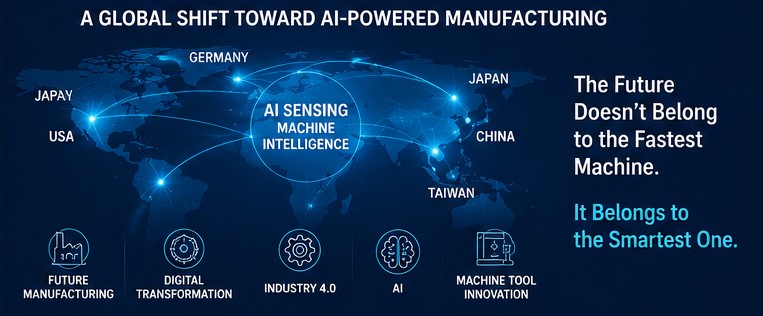
    In other words, whether a machine tool can know in real time what's happening during processing — whether the tool is wearing down, whether the workpiece has shifted, whether temperature is affecting precision — is becoming the new dividing line. That's why the phrase "sensing is competitiveness" has been echoing across smart manufacturing forums in Germany, Japan, and China over the past two years.
    The Role of Sensing Technology Is Shifting from "Monitoring" to "Decision-Making"

    Early sensing applications mostly stayed at the level of "recording data": vibration sensors logged vibration values, temperature sensors logged

    temperature curves, and engineers interpreted the results after the fact. The problem with this model is that by the time an anomaly was discovered, scrap or downtime had often already occurred.

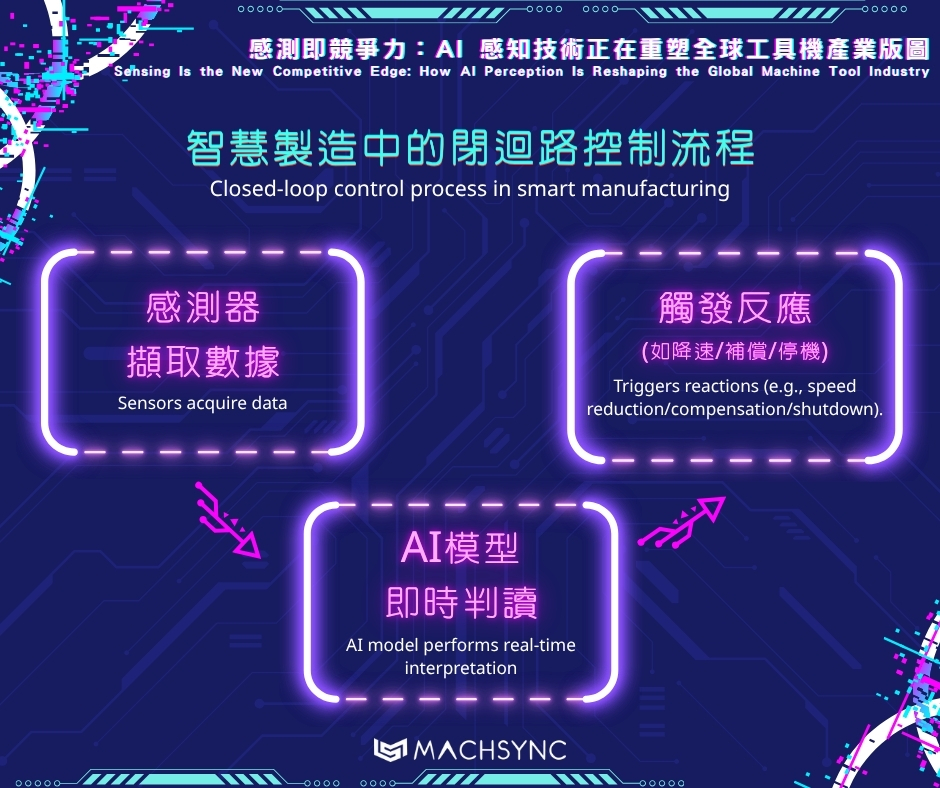
    What AI perception technology changes is precisely this time lag. By feeding sensor data in real time into trained models, a machine can determine within milliseconds whether a particular vibration pattern signals an imminent tool fracture, or whether a temperature change will push a workpiece out of tolerance — and trigger a response such as slowing down, applying compensation, or stopping altogether. Sensors are no longer just the machine's eyes; they've become part of the decision-making loop itself.

    The value this shift brings isn't simply "fewer scrapped parts." It's the transformation of the machine tool from a passive execution tool into a

    production partner capable of self-regulation.

    For Machine Tool Manufacturers: From Selling

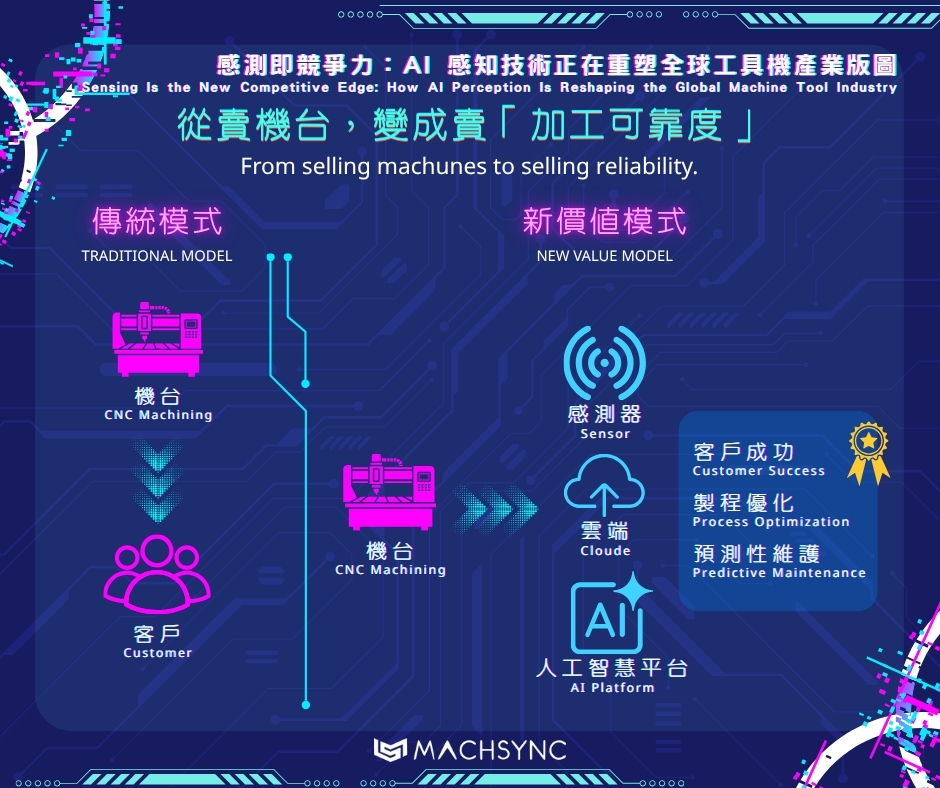
    Machines to Selling "Machining Reliability" For machine tool manufacturers, the most direct impact of adopting AI sensing capability is a shift in the product's value proposition. When purchasing machine tools, customers are increasingly evaluating whether a machine can catch anomalies on its own, and whether it can provide traceable data throughout the machining process — especially in industries with extremely high quality demands, such as aerospace, medical devices, and semiconductor equipment.

    This is also reshaping manufacturers' business models. Once a machine has sensing and data-reporting capability, manufacturers gain the opportunity to extend beyond one-time equipment sales into higher-value offerings such as predictive maintenance services and process optimization consulting, building longer-term customer relationships. Conversely, machines that lack this layer of perception risk being excluded from consideration altogether on the procurement shortlists of high-end customers in the future.

    For Parts Processors: Yield and Trust Are the SameThing

    For downstream parts processors, the value of AI sensing hits closer to everyday operational pain points. What processing shops fear most usually isn't a single mistake, but recurring scrap caused by not knowing where the problem lies — one batch of workpieces passes, the next batch fails tolerance, and no root cause can be identified.


    When a machine can sense and record key variables in real time during processing, that data becomes the basis for identifying anomalies and tracing them back to their source. "Stable yield" gradually shifts from something that depends on veteran machinists' experience into a capability that can be validated by data and replicated across different machines and shifts. For processing shops handling high-value, low-volume custom orders, this kind of traceability is also a key that unlocks customer trust — and even entry into higher-tier supply chains.

    Global Trends: Sensing Capability Is Moving from a Bonus to a Baseline Requirement

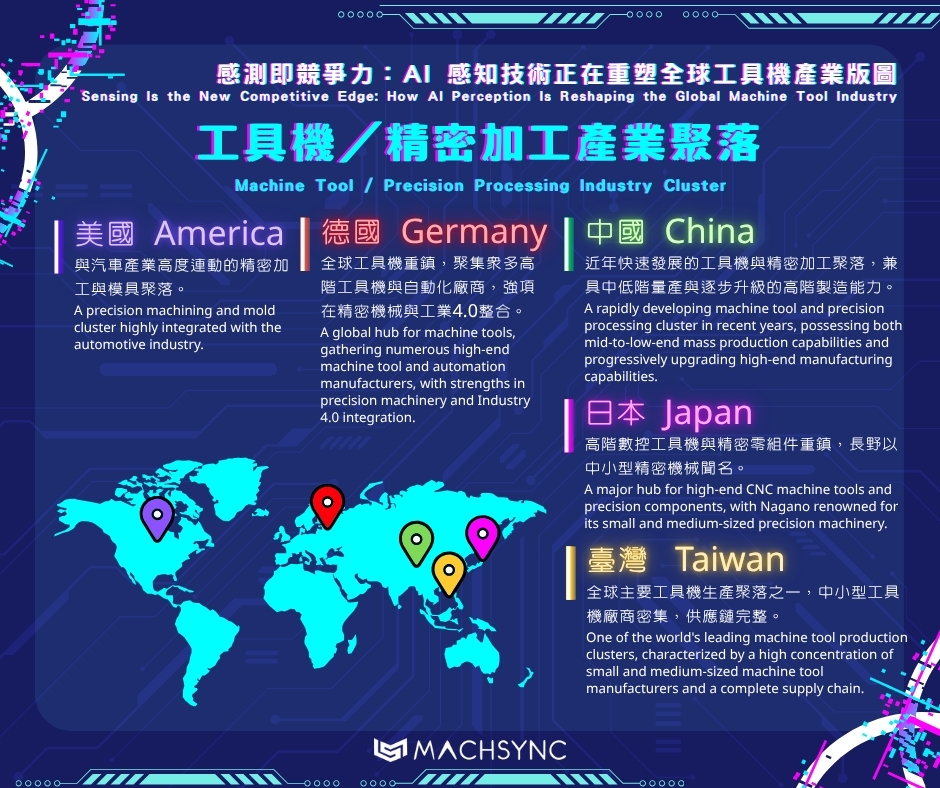
    Looking at recent international machine tool exhibitions and smart manufacturing policies, a pattern emerges: the focus of national initiatives has moved beyond simply "connecting machines to networks" toward "equipping machines with perception and judgment capability." This reflects a reality — acquiring data is no longer the hard part. The real competition lies in who can turn sensor data into real-time, reliable decisions.

    For Taiwan's machine tool industry and precision processing clusters, this represents both pressure and opportunity. The pressure is that clusters still operating on a purely mechanical manufacturing mindset risk gradually losing influence in the mid-to-high-end market. The opportunity is that, while the barriers to sensing and AI technology are real, they are not out of reach — those willing to invest early still have a chance to secure a favorable position in this wave of transformation.

    Conclusion

    Sensing capability has earned the label of a new competitive edge because it changes more than just what a machine can do — it redefines how the entire industry thinks about "quality" and "reliability," shifting from after-the-fact inspection to real-time perception and active adjustment. Whether for machinetool manufacturers or parts processors, how early they build this layer of perception capability may well determine their position in the global supply chain over the next five to ten years.

    Sources: Public domain references

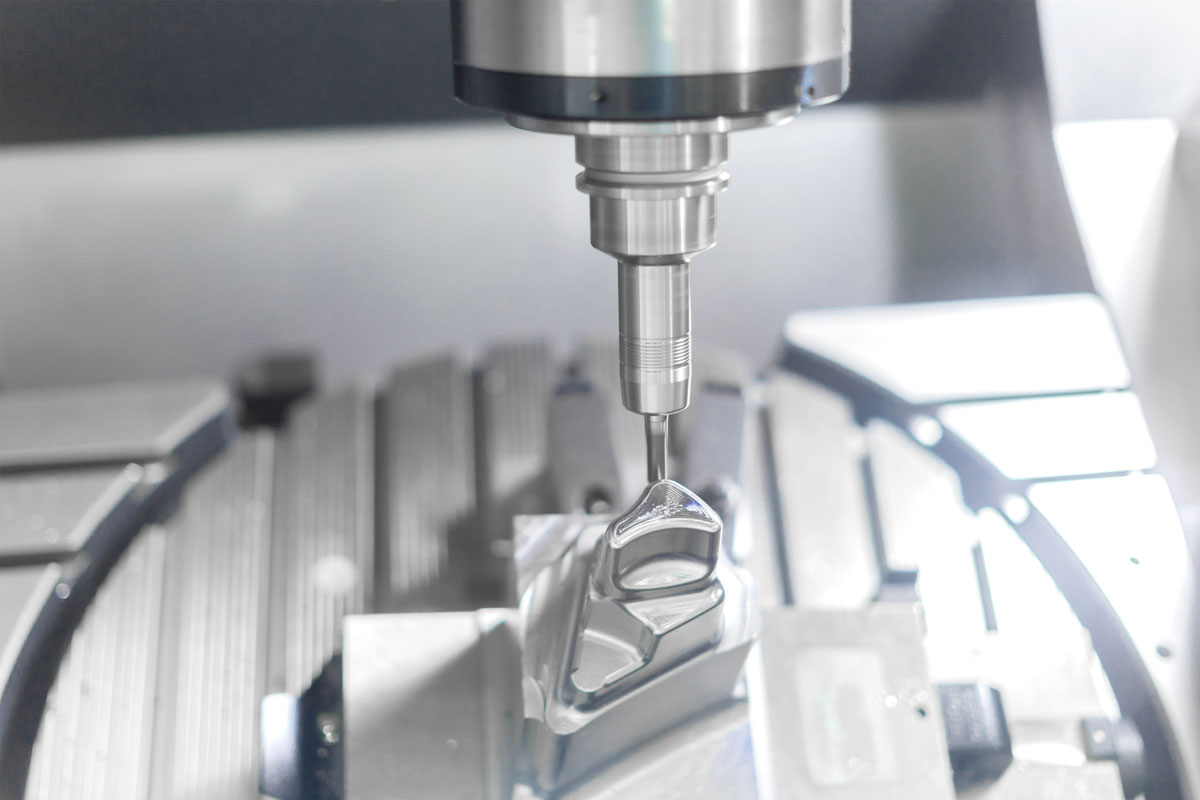
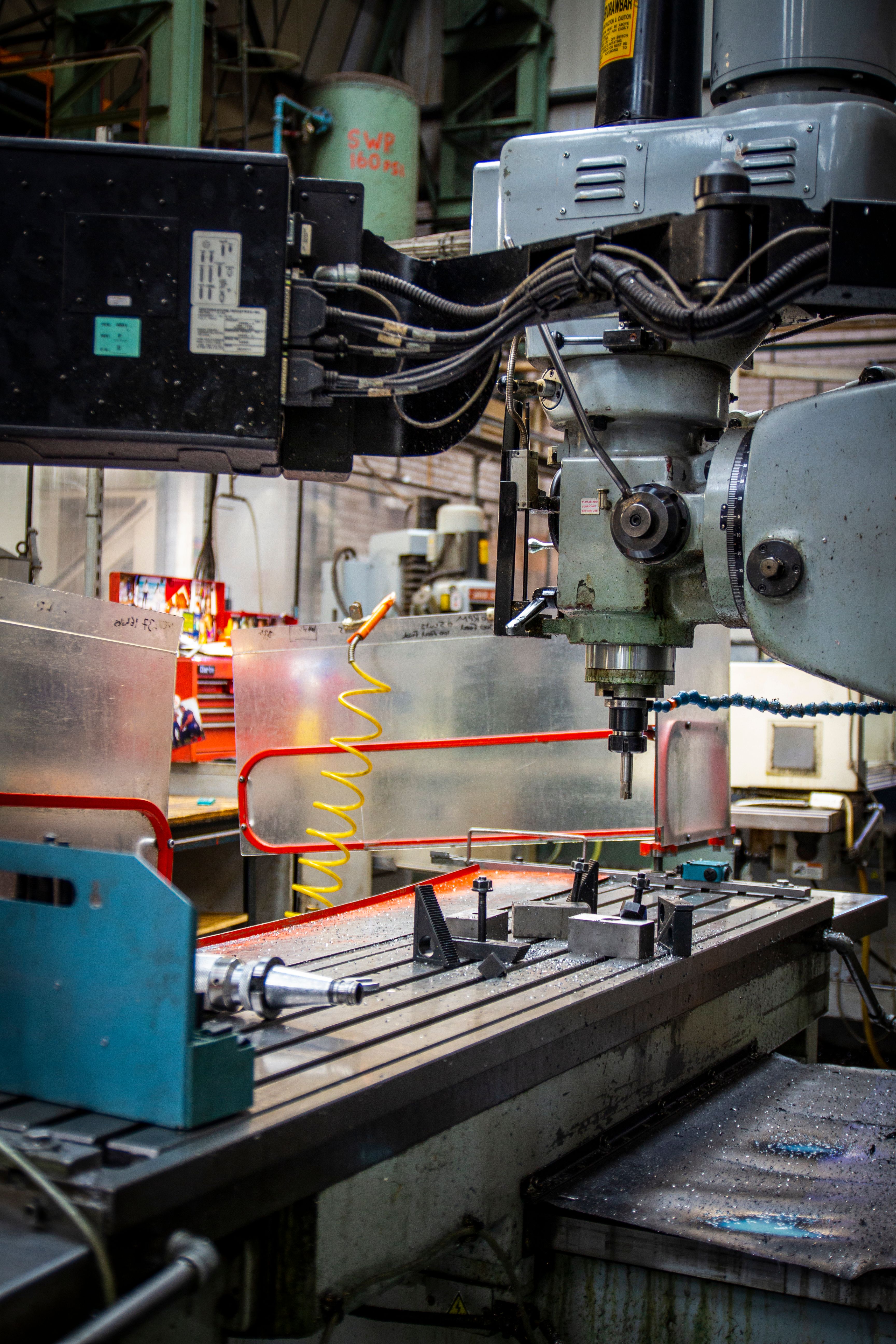
    Photo by Connor Lucock / Machsync

    This article is original content created by Machsync. It may not be used for commercial purposes or distributed, shared, or sold in any form. Unauthorized reproduction, excerpting, copying, or use in any visual format is strictly prohibited. 

    For reprint or licensing inquiries, please contact Machsync.

    ﹌﹌﹌﹌﹌﹌﹌﹌﹌﹌﹌﹌﹌﹌﹌

    📬 Get in Touch with Machsync

    📍 2F., No. 38, Keya Rd., Daya Dist. Taichung City, Taiwan

    📞 +886-4-2473-6883

    ✉️ admin@machsync.ai